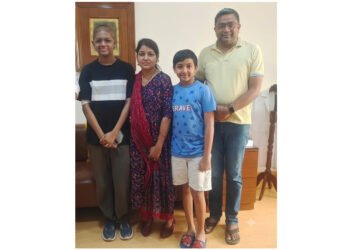



India has a strong legal framework designed to protect women, yet the journey from having rights on paper to accessing justice in reality remains challenging. Social stigma, financial dependence, lack of awareness, family pressure and limited access to timely legal assistance continue to prevent many women from seeking the remedies available to them. As a Senior Advocate practising before the High Court and Supreme Court, Dr. Harita Mehta has worked across criminal, civil, family and women-centric matters, giving her a broad perspective on the challenges women face within and beyond the courtroom.
In this conversation, Dr. Mehta discusses the gaps between legal protection and effective implementation, the recurring barriers faced by women and marginalized communities when approaching the justice system, and the need for greater legal awareness at the grassroots level. She also shares her perspective on how technology, legal aid, institutional sensitivity and social education can contribute to creating a safer, more equitable environment for women over the next decade.


1. You have worked across criminal, civil, family and women-centric cases. What are some of the biggest gaps you see today in access to justice for women?
One of the biggest gaps is that legal rights and actual access to justice are still two different things. India has several strong laws that protect women, but many women, particularly those from underserved communities, are not fully aware of their rights or the remedies available to them. Even when they are aware, financial dependence, family pressure, social stigma and fear of retaliation can prevent them from taking legal action.
Another challenge is access to timely and sensitive legal assistance. A woman approaching the legal system is often already dealing with emotional, financial or social distress. The system therefore needs to be not only legally accessible but also more empathetic and responsive to the realities women face.
2. Despite stronger legal protections, women continue to face domestic violence, harassment and sexual crimes. Where do you believe the biggest implementation gaps exist?
The primary gap lies between having a law and ensuring that it reaches the ground level effectively. Awareness, reporting, investigation, access to legal aid and timely resolution all play an important role.
In many cases, women hesitate to report abuse because of social stigma, family pressure or concerns about financial and personal security. There can also be a lack of awareness about where to approach and what legal remedies are available. Strengthening the response at the first point of contact—with police, legal aid authorities, counsellors and other support systems—is therefore extremely important.
We also need greater accountability and sensitivity throughout the process so that women feel heard and protected rather than discouraged from pursuing their cases.
3. Through your work with women and marginalised communities, what are some recurring challenges that victims face when they approach the legal system?
A recurring challenge is that many victims do not know where to begin. The legal system can appear complicated, particularly for someone who has never interacted with it before. There is also considerable fear around the consequences of taking legal action, especially when the accused is a family member or someone on whom the woman is financially or socially dependent.
I have also seen how emotional distress can make it difficult for victims to navigate a lengthy legal process. They may have to repeatedly explain their experiences, deal with procedural requirements and wait for outcomes. This is why accessible legal counselling, proper guidance and a victim-sensitive approach are essential.
For marginalised communities, economic barriers and limited access to quality legal representation can make these challenges even more pronounced.
4. How can legal awareness be strengthened among women, particularly those from underserved communities, so they understand their rights and available remedies?
Legal awareness needs to move beyond occasional campaigns and become part of everyday community education. Information about basic legal rights should be communicated in simple, regional-language formats through schools, colleges, workplaces, community organisations, self-help groups and local awareness programmes.
Women should be made aware not only of the laws that protect them but also of practical questions: Where can they seek help? What documentation may be required? What legal and support services are available? How can they access legal aid?
Technology can also play an important role, provided it is designed inclusively. Short videos, helplines, regional-language content and easy-to-understand digital resources can make legal information far more accessible. Most importantly, women should be encouraged to seek advice at an early stage rather than waiting until a situation becomes more serious.
5. Looking at the next decade, what legal or social changes do you believe are most important to create a safer and more equitable environment for women?
Over the next decade, I believe the focus should shift from simply having protective laws to ensuring that those laws work effectively and consistently on the ground. Faster access to justice, stronger legal aid, better victim-support mechanisms and greater sensitivity among institutions involved in the justice process will be important.
At the same time, legal reform alone cannot address the issue. We need deeper social change around gender equality, consent, economic independence and the acceptance of women’s right to make decisions about their own lives.
Education will be one of the most powerful tools in this process. If young people grow up understanding equality, dignity and respect, we can address harmful attitudes before they translate into discrimination or violence. A safer environment for women will ultimately require both an effective justice system and a society that understands and respects women’s rights.